
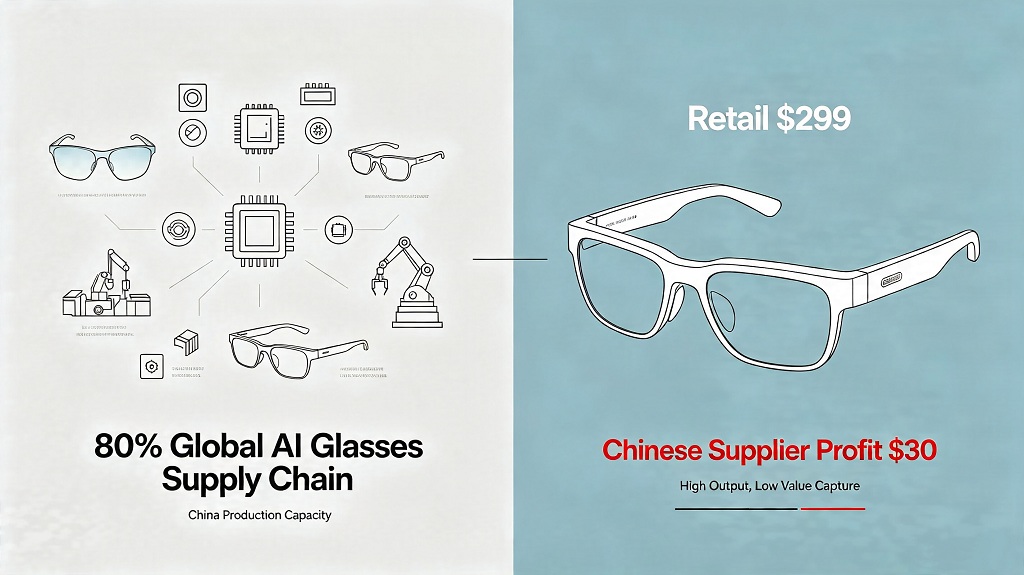
A pair of Meta Ray-Ban smart glasses retails for $299, yet the Chinese suppliers that make them may take home less than $30 in profit. Meanwhile, Chinese companies account for over 80% of the global AI glasses supply chain – from camera modules and optical coatings to final assembly, each segment holding more than 50% of global market share.
“80% in China” has become the standard narrative in trade show press releases. But rarely does anyone ask: how much of the value chain does that 80% actually capture?
A cost breakdown tells the real story. Optical modules eat up over 40% of the BOM, and chips take another 30% – together, more than 70%. Qualcomm’s AR1 Gen 1 chip alone costs nearly $50, and a waveguide display module runs into hundreds of yuan. By the time the brand has paid for materials, R&D, marketing, and after-sales service, there is little margin left. More absurdly, entry-level AI audio glasses without cameras, mass-produced via ODM, can be turned out at a cost of just $7. “Similar features” – but a three-fold price gap.
Leading Chinese AI glasses brands see gross hardware margins around 30%, and most start-ups survive on venture capital. “Hardware is essentially controlled by the supply chain; the real money sits upstream” – yet even that upstream margin is razor-thin.
When “China defines AI glasses” is touted as a breakthrough, who is asking: does the true power lie with the supply chain, or with brands and chipmakers? Are Chinese manufacturers truly defining AI glasses, or are they merely working for someone else’s brand?
Post time: Jul-13-2026