
Once seen as a gadget for tech enthusiasts, AI glasses are now entering everyday life at an astonishing pace.
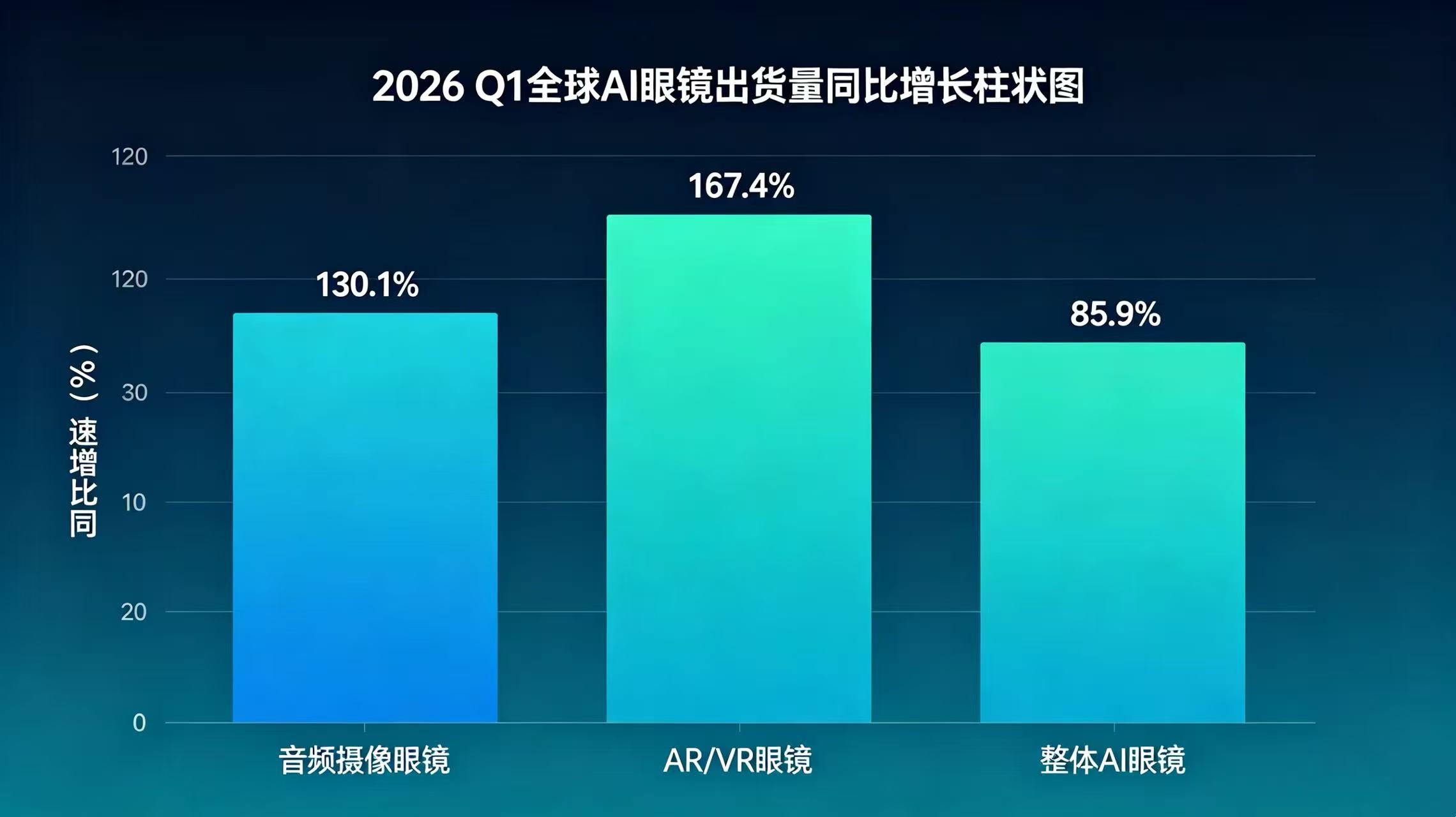
According to the latest IDC report, global shipments of AI glasses reached 3.566 million units in the first quarter of 2026, up 130.1% year-on-year. Among these, audio and audio-camera glasses accounted for 2.248 million units, a 167.4% surge, while AR/VR glasses shipments hit 1.318 million units, up 85.9%. IDC forecasts that Chinese smart glasses manufacturers will capture 45% of the global market share in 2026.
Behind the numbers lies a fundamental transformation in the products themselves.
In the past, the biggest complaints about smart glasses were discomfort—too heavy, short battery life, and an overabundance of flashy but impractical features. Data shows that over the past year, more than 200 new features were introduced across various smart glasses models, yet the long-term user retention rate for these features was less than 6%. More features often meant worse user experience—a paradox that plagued the industry.
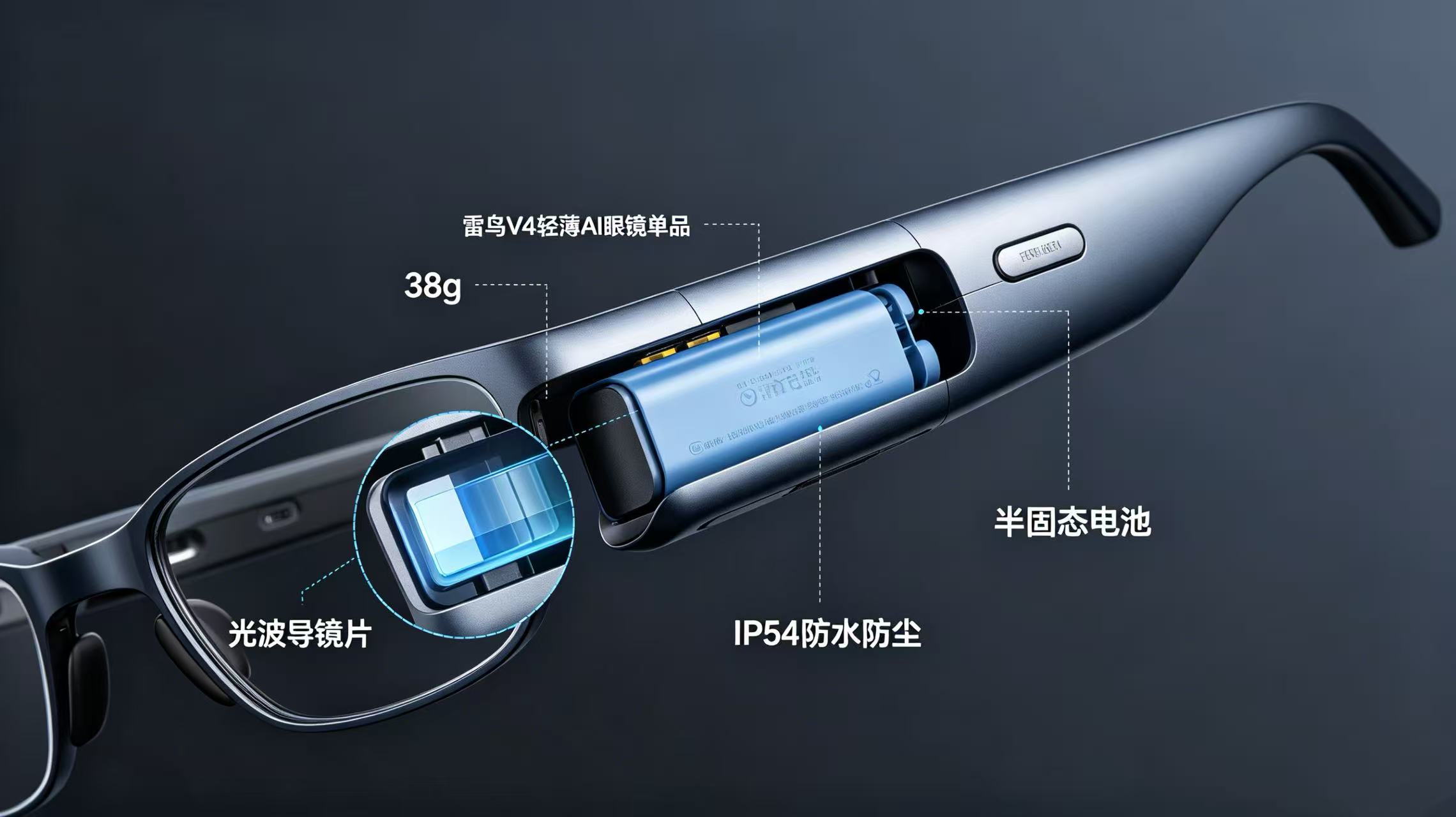
But 2026 is shaping up differently. Mainstream products now weigh between 40 and 50 grams, with some models approaching the feel of ordinary eyewear. Rayneo’s latest V4 model weighs just 38 grams, equipped with semi-solid-state batteries that significantly improve battery life and dust/water resistance. iFlytek also released its new AI glasses, weighing in at 40 grams and supporting real-time translation across 122 languages in various scenarios. Industry analysts note that edge-side large language models, optical waveguide technology, and micro-battery solutions are maturing, effectively addressing core pain points like bulkiness and limited endurance.
Use cases are expanding rapidly as well. From simple heads-up displays in the early days, AI glasses now support real-time translation, itinerary planning, voice interaction, and even children’s vision management. The technology is moving from “wearable” to “useful.”
Industrial infrastructure is keeping pace. In mid-June, Shenzhen released China’s first industry standard for smart glasses (draft), specifying general technical requirements and standardized interfaces and protocols. At the same time, a dedicated 2-billion-yuan industrial fund for smart glasses was officially launched. On the policy front, 2026 marks the first year that AI glasses have been included in the national subsidy program for digital product upgrades, and online retail sales in the first quarter surged 161.9% year-on-year.
Rayneo CEO Li Hongwei’s prediction may well be coming true: “The next one to two years will be the most critical period for smart glasses, and they are likely to see their own ‘iPhone moment.’”
From a niche gadget to a daily companion, these glasses are bringing a new era into focus.
Post time: Jun-23-2026