
Exporting eyewear to the EU used to require little more than CE marking. But starting in 2026, the entry ticket is being redefined — and not just once.
A wave of EU green regulations is converging on Chinese eyewear exporters. ESG is no longer a “nice-to-have” — it’s becoming a “must-pass.”
Nickel Release Standard: Metal Frames Bear the Brunt
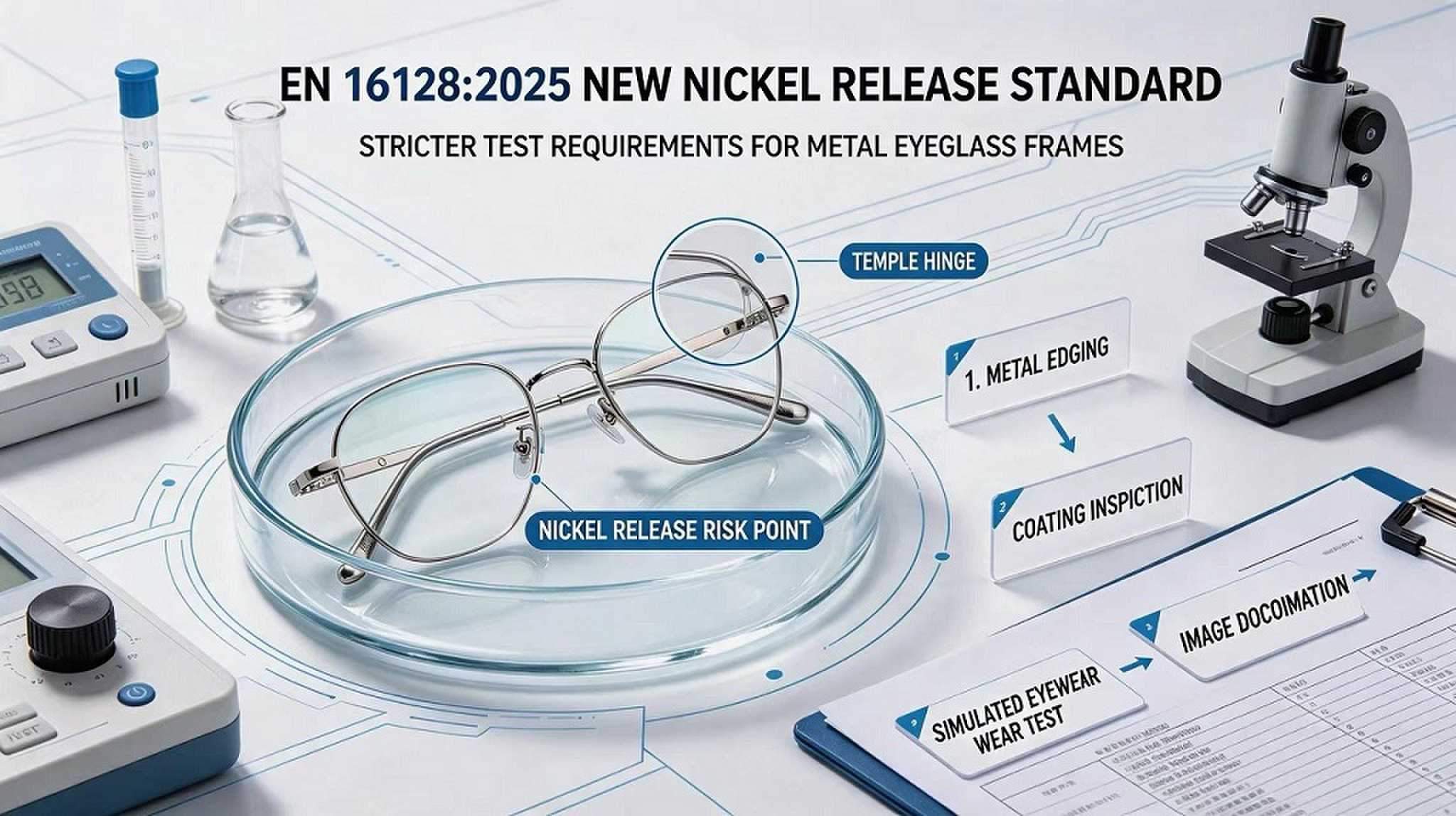
In October 2025, CEN published the new nickel release standard EN 16128:2025 for spectacle frames and sunglasses, replacing the 2015 version. By April 2026, it became a mandatory national standard across EU member states and is expected to be harmonized under REACH Annex XVII, Entry 27. The new rules tighten testing procedures — coating tests are no longer screening tests, lenses must be mounted during wear simulation, and photo documentation is now required. For manufacturers using metal components, this means stricter testing and significantly higher costs.
Carbon Footprint and Digital Passports
The EU’s Ecodesign for Sustainable Products Regulation (ESPR) , rolling out from 2026, requires companies to embed carbon reduction and circularity into product design and to provide product carbon footprints through a Digital Product Passport (DPP) . Meanwhile, the Carbon Border Adjustment Mechanism (CBAM) entered its definitive phase on January 1, 2026, with certificate purchases starting in 2027 — pushing many Chinese firms to build carbon management systems now.
The SME Compliance Cliff
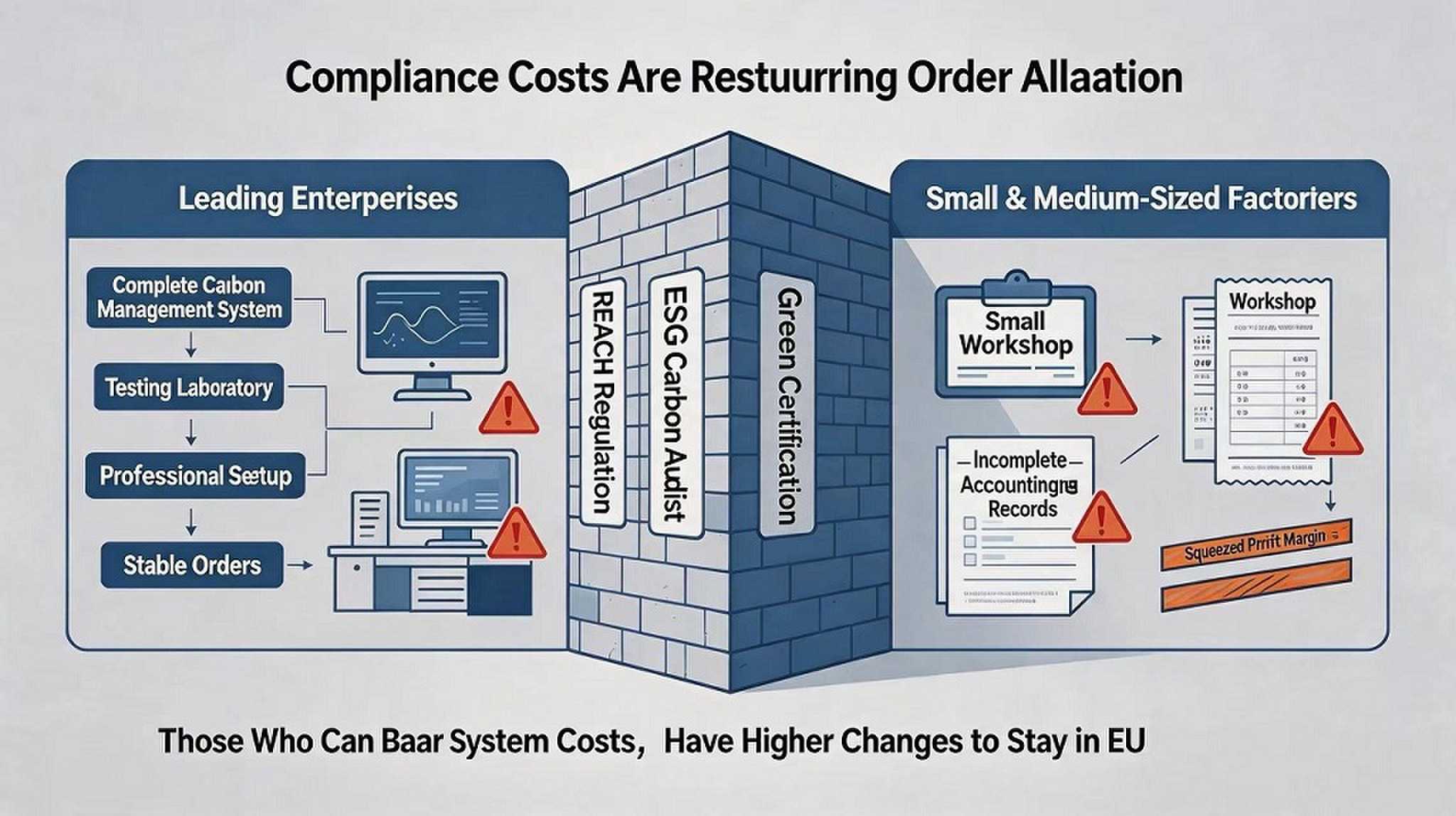
For small and medium-sized manufacturers, the burden is heavy. Full-scale carbon accounting and DPP compliance require end-to-end data collection across supply chains. Testing and certification can cost anywhere from a few thousand to hundreds of thousands of yuan — a steep price for companies with thin margins. Worse, these regulations overlap: nickel testing under REACH, carbon accounting under ESPR/CBAM, and environmental claims under the Empowering Consumers for the Green Transition Directive (effective September 27, 2026) , which requires third-party verification for any “green” marketing language.
Industry Consolidation Accelerates
A recent study by Frame The Future found that the eyewear industry lacks coordination — fragmented standards, inconsistent terminology, and weak data comparability make it hard for companies to act alone. Industry observers expect this ESG wave to accelerate consolidation. Large firms with scale will absorb costs and gain market access; smaller players unable to afford compliance may be forced out of the EU market or reduced to subcontractors.
For Chinese eyewear exporters, 2026 is a turning point: embrace compliance and turn ESG into a competitive advantage — or wait and risk being left behind.
As a Wenzhou-based manufacturer exporting to Western Europe and North America, RUISEN monitors these regulatory developments closely and works with certified labs to ensure its products meet evolving EU requirements
Post time: Jul-09-2026